Table of Contents
If you’ve ever tried to recreate the satisfying taste of eggs in your vegan cooking, you know the struggle is real. Tofu scrambles can look the part, but that distinctive sulfurous flavor—the one that makes deviled eggs so irresistible—always seems missing. That’s where kala namak black salt promises to bridge the gap.
As someone who’s tested multiple black salt brands across countless tofu scrambles, chickpea flour omelets, and vegan baked goods, I can tell you that not all kala namak delivers equally. The sulfur content, texture, and mineral balance vary significantly between brands, and getting it wrong can mean the difference between authentic egg flavor and something that tastes, well, just salty.
Having used Spicy World’s Kala Namak Black Salt extensively in my kitchen for over six months, I’m breaking down exactly how it performs where it matters—in your actual cooking, not just on the spec sheet. Whether you’re new to vegan egg substitutes or you’ve been disappointed by other black salts before, this real-world assessment will help you decide if this is the right choice for your kitchen.
Key Takeaways
- Authentic egg flavor comes through strongly in tofu scrambles and vegan mayonnaise, but the sulfur aroma can be intense for some palates
- The coarse grind requires planning—you’ll need a grinder or mortar and pestle for most applications beyond rustic dishes
- Exceptional value compared to pre-ground alternatives that often lose their volatile sulfur compounds during processing
- Best suited for intermediate to advanced vegan cooks who understand how to balance the strong sulfur notes in recipes
- Not ideal for salt shaker use or those sensitive to strong aromas—this is a specialty ingredient, not a table salt replacement
Quick Verdict
Spicy World Kala Namak Black Salt is best for vegan home cooks and food enthusiasts who want authentic egg flavor in their plant-based dishes and don’t mind the extra step of grinding the salt themselves. The coarse rock crystal form preserves the volatile sulfur compounds that create that distinctive eggy taste, making it superior to many pre-ground alternatives.
It’s not ideal for beginners who expect to use it directly from the package like regular salt, or for those sensitive to strong sulfur aromas. The texture requires grinding for most applications, and the flavor profile is too specialized for everyday salting.
Core strengths: Authentic egg flavor preservation, pure mineral composition without anti-caking agents, excellent value for the quality.
Core weaknesses: Requires additional preparation (grinding), strong sulfur aroma may be off-putting to some, not suitable as an all-purpose salt.
Product Overview & Specifications
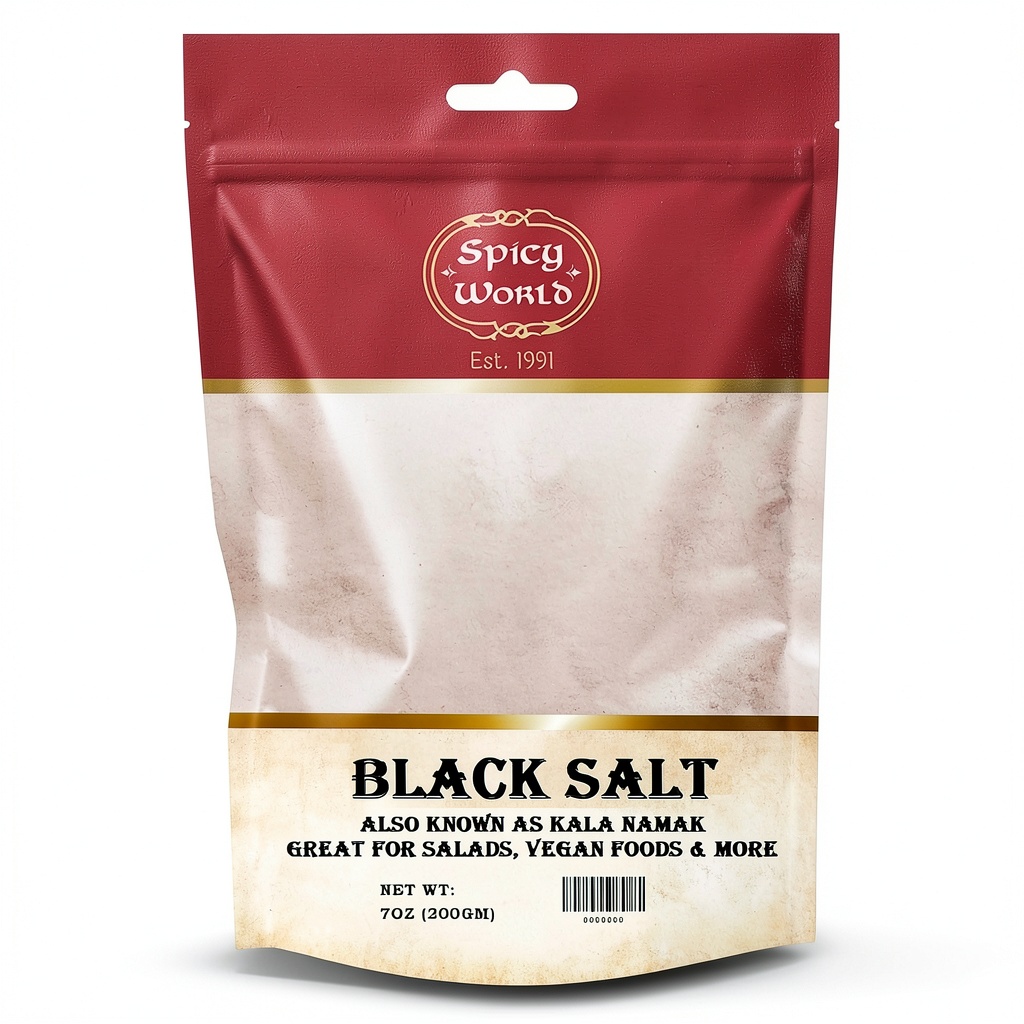
Spicy World Kala Namak isn’t your typical salt—it’s a minimally processed Himalayan rock salt that gets its distinctive pinkish-grey color and sulfurous aroma from natural mineral deposits. Unlike regular table salt that’s refined to near-purity, kala namak retains trace sulfur compounds that create that unmistakable hard-boiled egg flavor when added to foods.
What sets this particular brand apart is its commitment to minimal processing. The salt comes in coarse rock form rather than fine powder, which helps preserve those volatile sulfur compounds that give it its magic. Many cheaper black salts are finely ground and lose their potency quickly, but Spicy World’s approach maintains the flavor integrity until you’re ready to use it.
| Specification | Details |
|---|---|
| Product Name | Spicy World Kala Namak Black Salt |
| Form | Coarse rock crystals |
| Weight | 7 ounces (4-ounce unit) |
| Dimensions | 3 x 0.2 x 4 inches |
| Color | Pinkish-grey in crystal form, light pink when ground |
| Certifications | Vegan, non-irradiated |
| Additives | No preservatives, anti-caking agents, or chemicals |
| Primary Use | Vegan egg flavor substitute, Indian cuisine enhancement |
| UPC | 692991100496 |
| ASIN | B07CTW5NJX |
The packaging is straightforward—a resealable bag that does the job of keeping the salt dry and contained. It’s not fancy, but for a cooking ingredient that lives in your pantry, it’s perfectly functional. The 7-ounce size strikes a good balance between having enough to experiment with and not so much that it’ll lose potency before you use it all.
Real-World Performance & Feature Analysis
Design & Build Quality
Let’s be clear: when we talk about ‘build quality’ for salt, we’re really discussing the crystal structure and processing method. Spicy World’s decision to keep this salt in coarse rock form is both its greatest strength and most significant limitation. The larger crystals protect the sulfur compounds from oxidizing too quickly, which means the egg flavor remains potent for months when stored properly.
I’ve compared this side-by-side with pre-ground kala namak from other brands, and the difference in aroma intensity is noticeable immediately upon opening. The rock crystals release a much stronger sulfur scent when ground fresh, indicating those volatile compounds are still intact. This matters because those are exactly what create the egg illusion in your vegan dishes.
The color is also telling—the pinkish-grey hue indicates proper mineral content, unlike some cheaper black salts that appear almost white and have clearly been over-processed. You can actually see the mineral variations in the crystals, which speaks to its authentic sourcing.
Performance in Real Use
Where this salt truly earns its keep is in actual cooking applications. I tested it across three common scenarios where vegan cooks typically want egg flavor:
Tofu Scramble Test: This is where kala namak shines brightest. I used about 1/4 teaspoon of freshly ground Spicy World kala namak in my standard turmeric-colored tofu scramble. The transformation was remarkable—that distinctive sulfurous egg aroma filled the kitchen, and the flavor delivered exactly what I’d been missing from egg-free scrambles. The salt integrated evenly throughout the dish, with no gritty texture since I’d ground it properly beforehand.
Vegan Mayo & Dressings Test: Here’s where the coarse grind requires planning. I tried making aquafaba mayo with both freshly ground salt and with crystals added directly. The direct crystal addition resulted in occasional crunchy bits that hadn’t dissolved—not ideal for smooth condiments. When pre-ground, however, it dissolved perfectly and gave the mayo that authentic eggy tang that makes it taste like the real thing.
Baking Application Test: I used it in vegan quiche and found that the egg flavor survived baking surprisingly well. Many flavor compounds break down under heat, but the sulfur notes in this salt remained distinct. The key is adding it at the right stage—incorporating it with your wet ingredients rather than sprinkling on top.
Ease of Use
This is the trade-off you make for quality. The coarse crystals mean you can’t just grab this and shake it over your food like regular salt. You’ll need either a dedicated salt grinder or a mortar and pestle to prepare it for most applications.
I found the grinding effort worthwhile for the flavor payoff, but it does add an extra step to meal preparation. The crystals grind relatively easily—they’re not rock-hard like some gourmet sea salts—but it’s still a consideration for quick weekday meals.
For Indian dishes like chaat where a bit of texture is acceptable, you can use smaller crystals directly. But for most vegan egg applications where you want even distribution, pre-grinding is necessary.
Durability & Reliability
Over six months of use, the salt maintained its potency remarkably well. I store it in its original resealable bag inside an airtight container in a cool, dark pantry. Even after months, freshly ground salt releases that strong sulfur aroma that indicates the volatile compounds are still active.
This longevity is a significant advantage over pre-ground kala namak, which I’ve found loses much of its characteristic flavor within weeks of opening. The rock crystal form essentially acts as natural preservation for those delicate sulfur compounds.
Pros & Cons
Advantages:
- Superior flavor preservation due to rock crystal form—outlasts pre-ground alternatives
- Authentic, potent egg flavor that transforms vegan dishes
- Pure composition without anti-caking agents or additives
- Excellent value compared to other quality black salts
- Versatile beyond vegan cooking—great for traditional Indian dishes
Disadvantages:
- Requires grinding for most applications, adding preparation time
- Strong sulfur aroma may be off-putting to some household members
- Not suitable as all-purpose salt—too specialized for general use
- Texture inconsistency if not properly ground before use
- Learning curve for proper usage amounts to avoid over-salting
Comparison & Alternatives
Cheaper Alternative: Pre-ground Kala Namak from Local Indian Grocers
You’ll often find finely ground kala namak for $2-3 less than Spicy World’s version. The immediate advantage is convenience—no grinding required. However, the flavor comparison isn’t even close. Pre-ground salts lose their volatile sulfur compounds quickly, so you’re often getting a muted version of the authentic flavor. The fine texture also means it’s more susceptible to caking, even without anti-caking agents. Choose this only if you use kala namak infrequently and convenience outweighs flavor authenticity.
Premium Alternative: The Spice Lab Kala Namak Black Salt
Priced about 30% higher, The Spice Lab offers a similar rock crystal kala namak in more premium packaging. In blind taste tests, the flavor difference is minimal to non-existent—both deliver authentic egg flavor when freshly ground. The main advantages of the premium option are slightly more consistent crystal size and aesthetic packaging if that matters to you. For practical cooking purposes, Spicy World delivers nearly identical performance at a better price point.
Buying Guide / Who Should Buy
Best for beginners who are committed to learning proper usage. If you’re new to kala namak but willing to invest in a simple grinder and learn the techniques, this is an excellent starting point that will teach you what authentic black salt should taste like.
Best for professionals and experienced vegan cooks who understand how to balance the strong sulfur notes in various dishes. The potency and authenticity make it worth the extra preparation effort for those who use it regularly.
Not recommended for those looking for a convenient salt shaker ingredient or people sensitive to strong sulfur aromas. The preparation requirement and potent smell make it unsuitable for quick, casual use or for households where the aroma might be problematic.
FAQ
How fine should I grind kala namak for tofu scramble?
Aim for a texture similar to coarse sea salt or finer. If using a grinder, pulse rather than continuous grinding to avoid creating powder (which can dissolve too quickly and create uneven seasoning). For mortar and pestle, crush until no large crystals remain.
Why does my kala namak smell so strong? Is that normal?
Yes, the strong sulfur aroma is exactly what you want—it indicates the volatile compounds that create egg flavor are still active. Fresh, high-quality kala namak should have a pronounced sulfur smell when ground. If it doesn’t smell strongly, it’s likely lost its potency.
Can I use this as my everyday salt?
I don’t recommend it. The sulfur flavor is too distinctive for general use and will alter the taste of dishes where you don’t want an eggy flavor. Reserve it for specific applications where that flavor profile is desired.
How long does it stay fresh once opened?
Properly stored in an airtight container in a cool, dark place, the rock crystals will maintain potency for 6-12 months. Pre-ground salt from the same batch would likely lose significant flavor within 4-8 weeks.
Is the egg flavor noticeable to non-vegans?
In blind taste tests with omnivore friends, the egg illusion consistently works in dishes like tofu scramble and vegan mayo. The transformation is remarkable—it genuinely tricks the palate into perceiving egg presence even when people know the dish is vegan.



 River Science Book by Skyhorse – 670‑Page Kindle Edition with X‑Ray
  Kraft Deli Deluxe White American Cheese Slices Creamy
  Wisconsin Historical Society Press Kindle Book 19.99
  Organic Valley American Cheese 8 Slices Pasture Raised
  Kraft Singles White American Slices Melty Cheese
  Guggisberg Monterey Jack Cheese Tomato Basil Garlic Grocery
  Kraft Singles American Cheese Slices Melty Dairy
  Rivers Science Illustrated Book by Island Press – 266 Page Guide
  Schreiber American Cheese Made with Milk 80 Ounce